AI & Gaming
Deepfakes and cloned voices: esports’ new ethical headache
AI-cloned voices of players and casters are already circulating without consent, raising an identity question the esports scene isn’t ready to handle.
Jake Thompson··1 min read
 NTE: Neverness to EvernessPlay now
AI-cloned voices of players and casters are already circulating without consent, raising an identity question the esports scene isn’t ready to handle.
Models trained specifically on 32- and 64-bit game textures are visually modernizing classics without touching a line of their code.
Several platforms are testing tools capable of live-translating a stream into multiple languages with only a few seconds of delay.
Several studios are experimenting with language models to generate quest content on the fly, with results that remain very uneven.
 Ragnarok Online: World JourneyPlay now
More and more studios use generative AI tools to previsualize cinematic scenes before final motion-capture shoots.
Analyzing millions of ranked matches to spot players with untapped potential is becoming a real recruiting tool for some esports organizations.
Rather than fixed tiers, several recent games use models that analyze player performance continuously to adjust difficulty on the fly.
Beyond NVIDIA ACE-style conversational NPCs, large language models are quietly working their way into level design, QA testing, and assisted writing. A full rundown.
Making a new account to stomp beginners has never been riskier. Behavioral detection systems catch rank-dodgers within a handful of matches.
Voice cloning, automatic lip-sync: AI voice engines are cutting the cost and turnaround of localization. Voice actors and purists aren't all on board.
A new generation of tools analyzes your replays and gives real-time personalized advice. We tested what they actually add over just rewatching a replay yourself.
Riot Vanguard, EasyAntiCheat, BattlEye: anti-cheat systems increasingly rely on behavioral detection models instead of signature lists.
Retexturing an old game with a local AI instead of by hand: what actually changes in quality, and the hardware you need to keep pace.
After three years of tech demos, NVIDIA ACE is finally shipping in a handful of commercial games. What the tech gets right, and what still feels artificial.
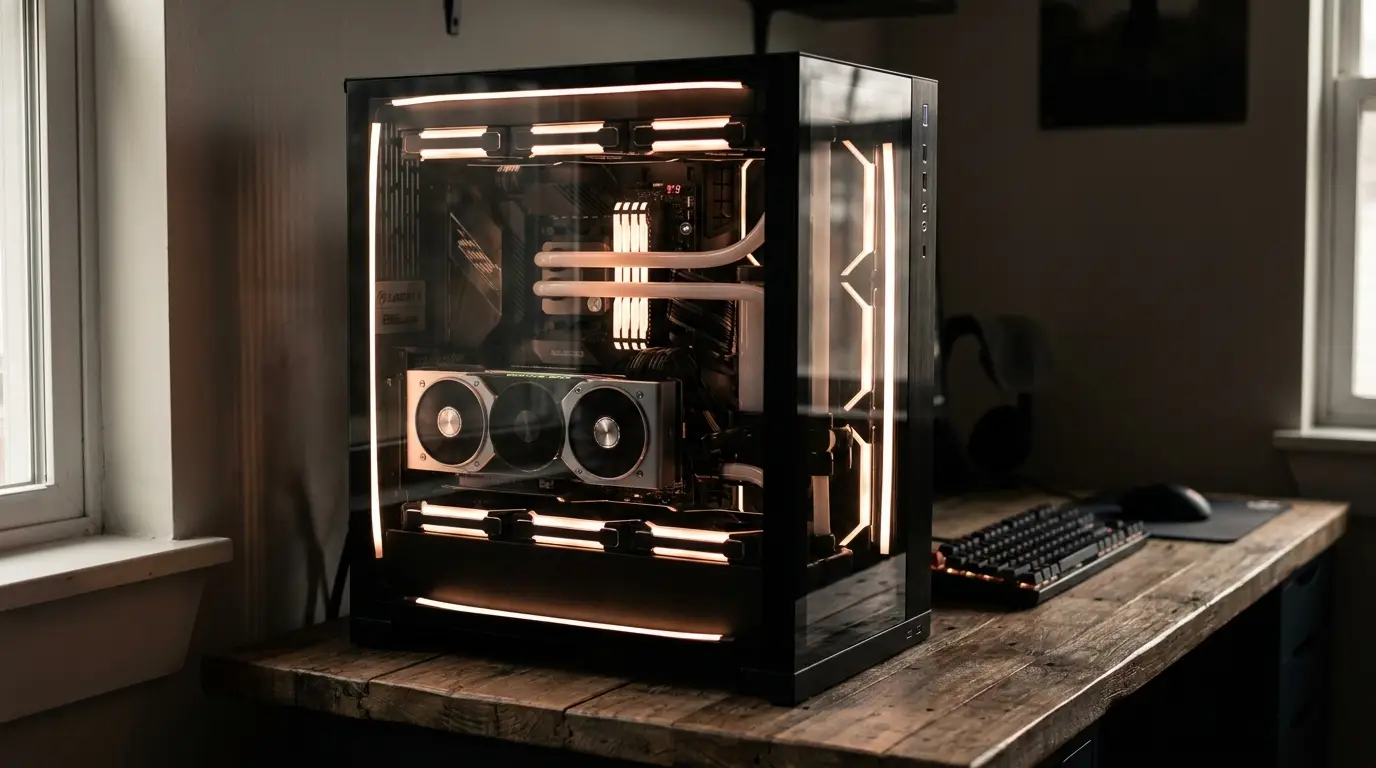
Three builds tested, from $1,000 to $3,000, with the real trade-offs between VRAM, inference speed and framerate.